
Securing the Maintenance Phase
Securing the software supply chain doesn't end when a release ships. Maintaining released software is an important part of security.


Choosing an SBOM Generation Tool
There are so many tools to build SBOMs for your application. How do you know which one to pick?


Code is More Important than Identity for Security
Asking open source contributors to prove their legal identity doesn’t make software more secure.


Open Source Accelerates Secure Software
The US DoD’s Software Fast-Track Initiative looks to improve software procurement and security. Open source software must be a key part of this.
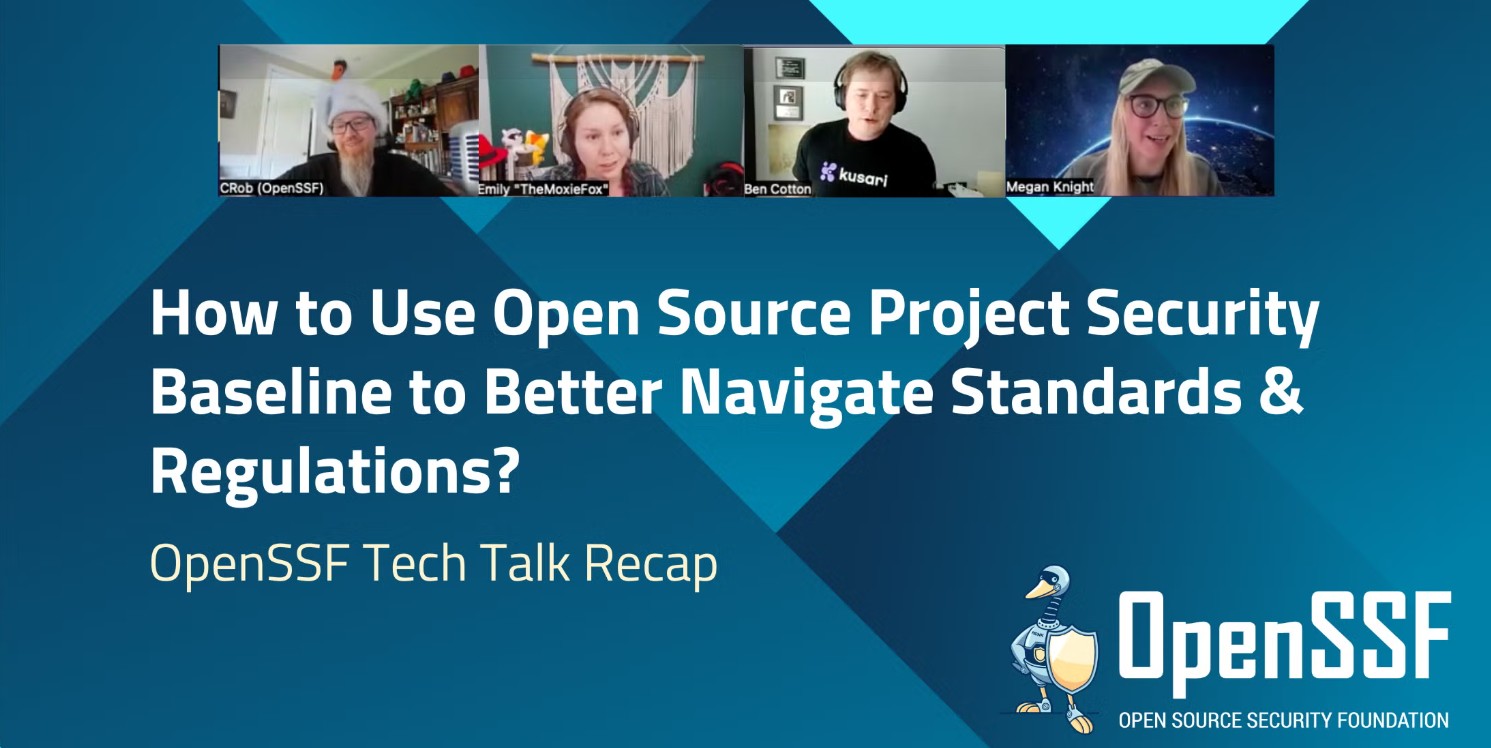
OpenSSF Tech Talk Recap: Using the OSPS Baseline to Navigate Standards and Regulations
Open source projects are in the spotlight as regulated industries, governments and those that sell to them ramp cybersecurity expectations. Enter Open Source Project Security (OSPS) Baseline!

Endpoint Security is Supply Chain Security
Endpoint security is a key part of many IT security efforts, but it’s not always thought about in the specific context of software supply chain security.
Identifying Threats in the Implementation Phase
Many threats present themselves while implementing software. Here's how to find and address them.

The Future of CVEs
Recent funding concerns have highlighted the need for a more resilient system of vulnerability identification.

VulnCon 2025 Recap
Kusari CTO Mike Lieberman shares his thoughts after attending the second-annual VulnCon conference.

The Hidden Risk in Your Software: Managing Transitive Dependencies
Beyond knowing why transitive dependencies are important, you have to know how to manage them.


Codifying the SDLC with in-toto
in-toto helps ensure product integrity by making transparent what steps were performed, by whom, and in what order.

The Hidden Risk in Your Software: Understanding Transitive Dependencies
Transitive dependencies are the invisible majority of your applications. Failure to properly understand them increases your risk.

Providing Secure Updates with TUF
A secure and resilient method for distributing software updates is a key part of keeping your supply chain trustworthy.

Securing the Software Supply Chain book now available!
This new book from Michael Liberman and Brandon Lum guides you from the basics of supply chain security through to being a security expert.


GUAC Now Supports Runtime Kubernetes SBOMs using Kubescape
GUAC v0.14.0 includes a Kubescape collector that can be run inside your Kubernetes cluster to watch for new scan results from Kubescape and ingest those results into GUAC



Securing Your AI Models
The abilities of generative and agentic AI models require a proactive approach to protecting the AI supply chain.


The Last Step on the Security Journey: Kusari Platform
When you need a solution for managing your software supply chain, the Kusari Platform provides enterprise-ready features backed by security expertise.

Another Step on the Security Journey: A Constellation of SBOMs
Comparing two SBOMs is useful, but as your portfolio grows, you need to take a holistic approach.

The Next Step in the Security Journey: Comparing SBOMs
Once you have multiple releases, you have multiple SBOMs. What can you learn from comparing them?

Starting the Security Journey: Producing an SBOM
A hypothetical organization takes the first step on their software supply chain security journey by creating an SBOM for their application.

Unpacking Kusari Platform Views
Kusari Platform gives you the information you need to secure your software supply chain.


Raising the Bar for Open Source Security: Introducing the OSPS Baseline
Kusari is proud to contribute to the Open Source Project Security Baseline, an OpenSSF project to help open source maintainers improve their security posture.

Addressing Third-Party Risk in Open Source Software
Once you've discovered the third-party risks in the open source projects you consume, how do you address those risks without having a vendor relationship with the projects?

Analyzing Third-Party Risk in Open Source Software
Third-party risk management is an important part of protecting your organization. But how do you manage the risks of open source software when you have no vendor relationship?